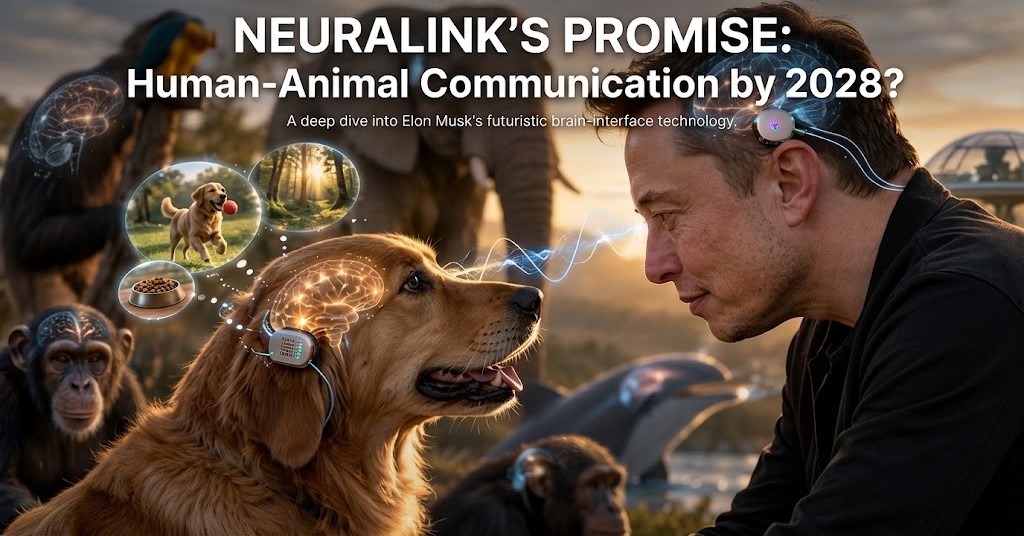
The Vision of Interspecies Dialogue
Elon Musk’s ambition for Neuralink extends far beyond medical rehabilitation. While the primary focus of brain-computer interfaces (BCIs) remains restoring mobility and autonomy to individuals with motor paralysis, Musk has suggested that Neuralink could eventually enable direct communication between humans and animals. If realized, this capability would mark one of the most profound leaps in science and philosophy, forever changing human perception of the natural world.
Neuralink’s technology relies on micro-scale electrodes implanted directly into brain tissue:
- Signal Acquisition: These thread-like probes record electrophysiological activity—the micro-voltage spikes emitted by firing neurons.
- Pattern Interpretation: Machine learning algorithms translate these complex neural signals into actionable digital commands, allowing human patients in clinical trials to control cursors, robotic limbs, or digital interfaces using intent alone.
- The Fundamental Challenge: While translating human brain activity into digital movement relies on predictable neural pathways, decoding an animal’s inner experience presents a fundamentally different challenge.
Sensory Universes and Biological Diversity
The primary obstacle to interspecies communication is not merely technical; it is cognitive and biological. German biologist Jakob von Uexküll introduced the concept of the Umwelt—the unique sensory world in which each species exists.
Perceptual Disparities
- Dogs: Experience their environment primarily through olfaction, processing scents through millions of specialized receptors and dedicated brain regions.
- Cetaceans & Bats: Marine mammals (like dolphins and whales) and bats rely on echolocation, creating high-resolution 3D spatial maps using acoustic reverberations.
- Birds & Insects: Many birds navigate using geomagnetic fields, while insects perceive ultraviolet light patterns invisible to the human eye.
The Translation Problem: Human language relies on abstract symbols, syntax, and conceptual grammar. An animal’s brain, however, processes sensory-driven intent, instinctual emotional states, and environmental feedback. Consequently, scientists cannot simply map an animal's neural activity directly onto human words or syntax.
Current Progress: AI and Bioacoustics
While invasive implants like Neuralink are still in early experimental stages, non-invasive approaches powered by Artificial Intelligence are making rapid progress.
- Pattern Recognition in Bioacoustics: Initiatives like the Earth Species Project utilize self-supervised machine learning models to analyze thousands of hours of bioacoustic recordings.
- Acoustic Clustering: AI models can isolate individual animal calls from noisy natural environments, identifying repeating structures and contextual triggers across species such as whales, dolphins, primates, and songbirds.
- Neural Decoding vs. Conversation: While current neural decoders and acoustic models can identify basic emotional states (e.g., fear, distress, hunger, or territorial warnings), establishing a two-way conversational dialogue remains beyond reach. The speculative timeline remains largely unverified by peer-reviewed consensus.
The Consequences of Achieving Interspecies Communication
If technology eventually allows humans to decode, understand, and communicate directly with non-human species, the global impacts would reshape ethics, law, agriculture, conservation, and human philosophy.
1. Philosophical and Ethical Shift
- The End of Human Exceptionalism: Direct evidence of complex internal thought, emotional depth, or self-awareness in animals would challenge long-held anthropocentric views.
- Moral Status: Society would be forced to reconsider how animals are treated in labor, entertainment, scientific research, and domestic life.
2. Legal Rights and Personhood
- Legal Personhood for Animals: If animals can express explicit intent, consent, or suffering, legal frameworks would need to evolve. Courts might grant fundamental rights—such as protection from bodily harm or unlawful detention—to highly cognitive species (e.g., cetaceans, great apes, and elephants).
- Animal Advocacy: Legal representation for non-human clients could become a standard subfield of international law.
3. Industry and Agriculture Transformation
- Rethinking Factory Farming: Understanding the direct expressions of pain, distress, or fear in livestock would accelerate global transitions toward plant-based alternatives, cellular agriculture, and stricter animal welfare laws.
- Veterinary Care & Animal Welfare: Veterinarians would no longer rely solely on physical symptoms; direct neural feedback would allow accurate diagnoses of internal pain, anxiety, and illness.
4. Ecological Conservation and Management
- Informed Biodiversity Protection: Conservationists could communicate with key species to understand environmental stressors, migration route disruptions, or habitat degradation directly from the animals experiencing them.
- Mitigating Human-Wildlife Conflict: Wildlife management teams could use localized acoustic or neural signaling to deter animals from farmlands, highways, or urban areas without physical harm.
5. Ethical Risks and Manipulation
- Invasive Exploitation: The ability to send signals into an animal’s brain raises severe ethical concerns regarding control, behavioral manipulation, or military exploitation (e.g., controlling marine or aerial species for surveillance).
- Consent and Neural Privacy: Establishing safeguards against unauthorized neural interventions in both humans and animals would become a critical policy priority.
The pursuit of interspecies communication pushes the boundaries of technology and philosophy. As AI and neural interfaces continue to evolve, society must weigh groundbreaking scientific achievements against profound ethical responsibilities. For more world news and deep tech insights, keep visiting www.jobsblogs.online.