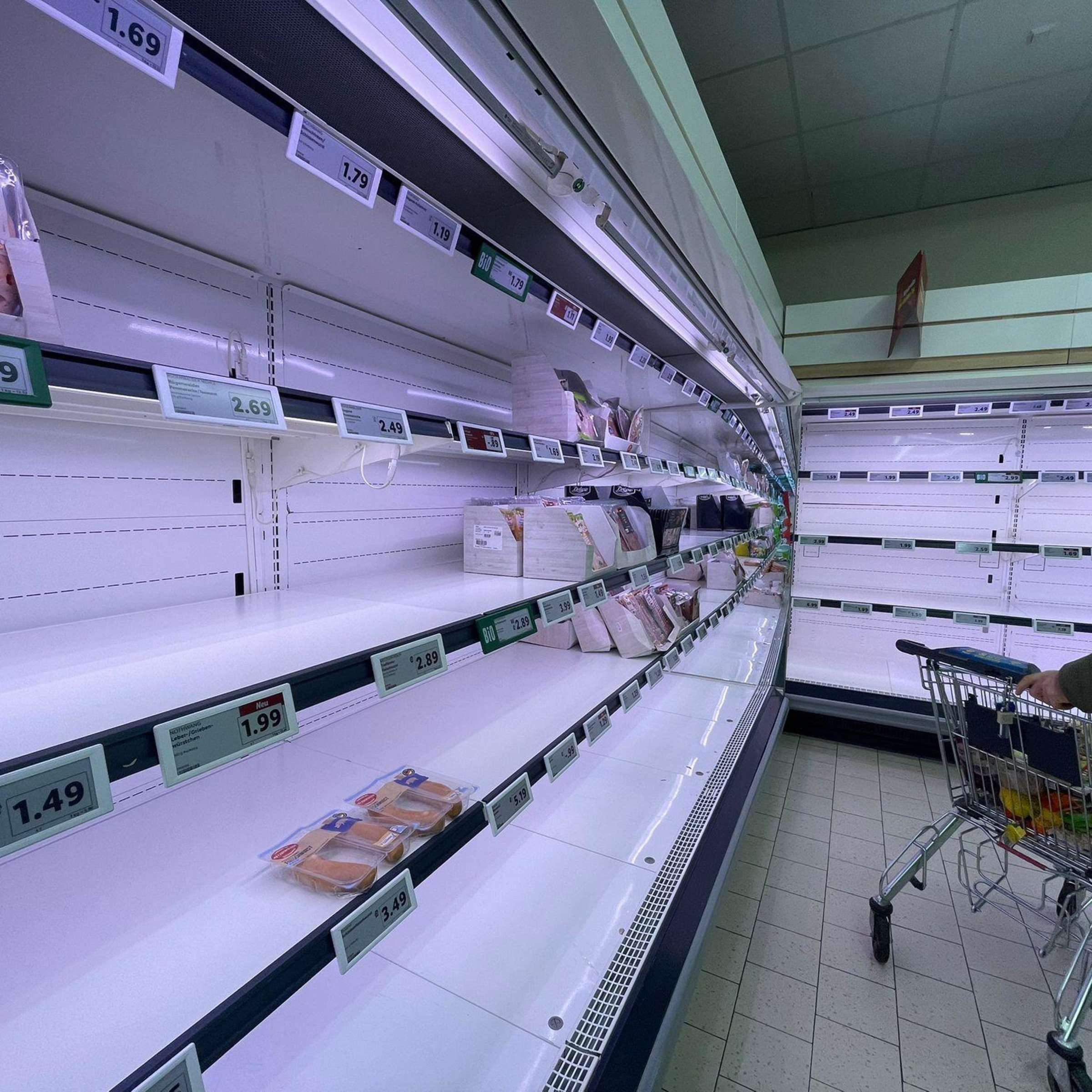
A number of incidents have taken place affecting supermarkets in Belgium, Sweden, Netherlands, Estonia, Luxembourg, Finland and Ireland, with fridge and freezer temperatures turned up, spoiling food. Dozens of supermarkets in Europe have reported temperatures of their refrigerators and fridges rising overnight, now widely believed to be caused by cyber attacks similar to the one that affected France several weeks ago.
The story began with Belgian media reporting on Monday that fridges were turned up to 17 degrees Celsius, forcing many stores to throw away food. Belgium's Centre for Cybersecurity (CCB) told Belgian outlet Belga that it is aware of an incident targeting supermarket refrigeration systems. CCB spokesperson Katrien Eggers told Euronews Next, "We are aware of an incident, but have no further information." There are no reports yet as to who was behind the attack... and it may never be possible to identify them.
Belgium's federal prosecutor's office have opened an investigation into the incident, according to a spokesperson.
Impact Across Belgium and Europe
Some 40 Delhaize Proxy supermarkets, 15 Carrefour Shop & Go stores, 15 Intermarché shops and five Spar Q8 service station locations have reportedly been impacted in Belgium, according to Belgian outlet Le Soir. Butchery group De Laet en Van Haver also said that their fridges were affected. IKEA have also said their Bergen shop located at Mons was affected, bringing the total to 75 stores affected in Belgium.
"We have identified an IT incident affecting the refrigeration systems in several dozen stores. We immediately took the necessary measures to keep our stores operational," a spokesperson from Delhaize told Euronews Next. Carrefour Belgium spokesman Mich Vergauwen later confirmed, "It's a cyberattack, there is no other reason," adding that the "impact is very limited".
Problems also occurred at stores of Swedish supermarket chains ICA and Coop, with refrigerators and freezers turned up to 50 degrees Celsius. Similar incidents occurred in Estonia at Selver, in Ireland at 13 SuperValu stores, and across at least 17 companies in the Netherlands, while K Group stores were affected in Finland. Delhaize also suspended ordering systems in Luxembourg as a precaution.
Technical Mechanism and Software Vulnerability
Stephan Moelans, CEO of refrigeration installer Sabcobel, stated that the Belgian attack involves exactly the same mechanism as the previous French cyberattack, with units' evaporators switched to defrost mode. He noted that a software update alone is not enough, requiring physical modifications or management over secure internet connections.
Danfoss, the company that supplied the software for the affected refrigeration systems, stated that the vulnerability lies primarily in outdated software and that customers had already been urged to upgrade.
Reported Impact Summary
| Country | Reported Impact |
|---|---|
| Belgium | Around 40 Delhaize stores and 15 Carrefour stores affected |
| Luxembourg | Delhaize stores affected |
| Sweden | ICA and Coop stores affected |
| Ireland | 13 SuperValu stores affected |
| Netherlands | Refrigeration systems at food businesses affected |
| Estonia | At least one supermarket incident reported |
Broader Risks to the Food Supply Chain
These attacks highlight a growing security risk: hackers can use digital systems to disrupt physical infrastructure, including Europe's food supply chain. While there is currently no evidence of a general food shortage, repeated targeting of large distribution centers, cold-storage warehouses, and food-processing facilities could cause widespread economic consequences and push up food prices.
For ongoing verified news updates and global current affairs, keep visiting www.jobsblogs.online.