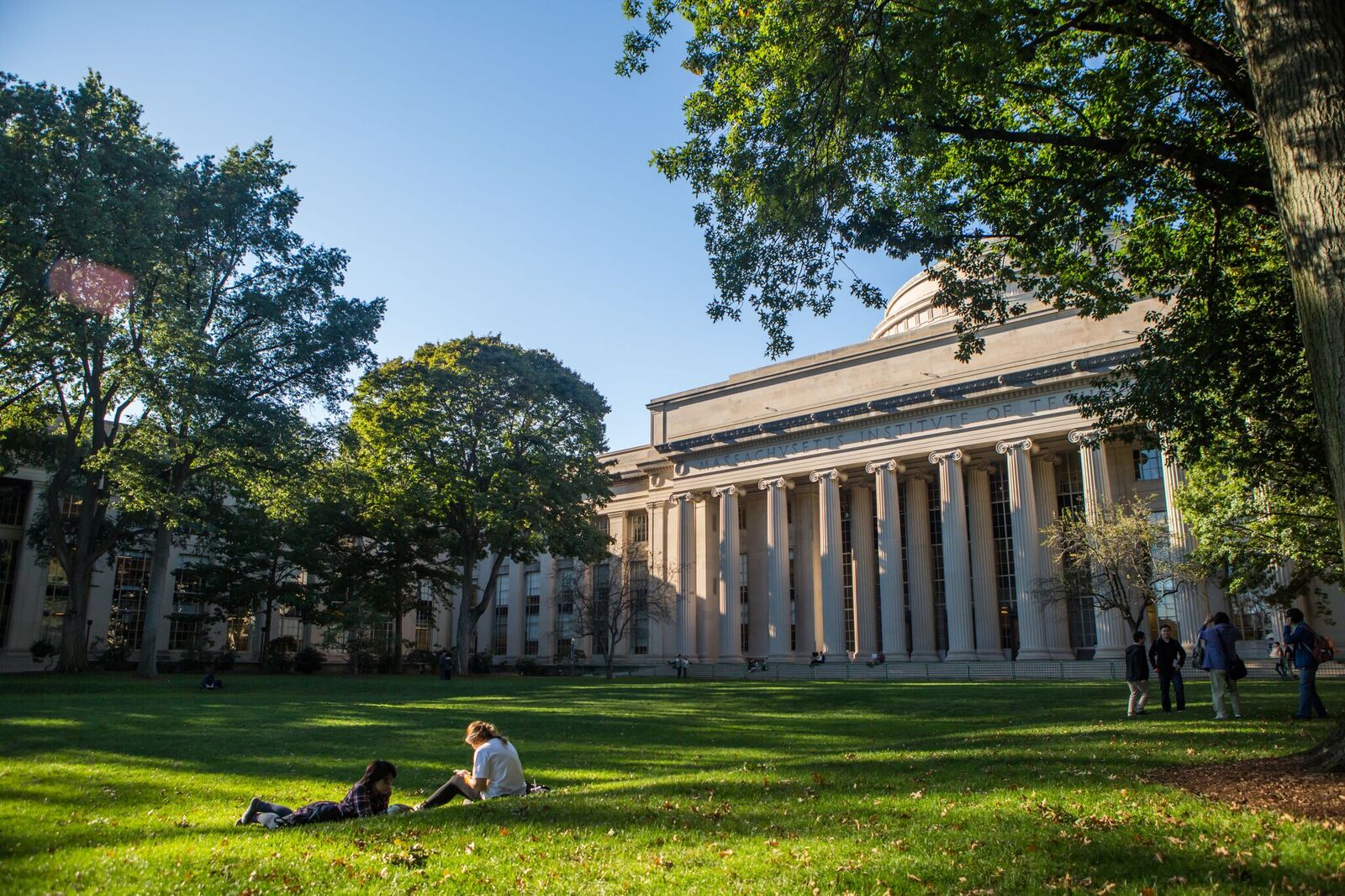
MIT is one of those universities that can change the direction of a student's life. From artificial intelligence and robotics to space exploration, biotechnology, economics, and entrepreneurship, its community brings together people who want to understand difficult problems and build solutions that matter.
For students in the United States, MIT can offer access to outstanding academic resources, research opportunities, and a powerful professional network. For international students, it can also be a pathway to studying alongside talented people from around the world.
But is MIT really the world's best university? How difficult is admission? Can international students receive full financial aid? Which departments are available, and is it worth applying if you live outside the United States? Let this guide answer your questions.
1. What Is the Massachusetts Institute of Technology (MIT)?
The Massachusetts Institute of Technology, widely known as MIT, is a private research university located in Cambridge, Massachusetts, United States. It was founded in 1861 and opened its doors to students in 1865.
MIT is internationally recognized for its work in science, technology, engineering, mathematics, economics, business, architecture, and interdisciplinary research. Unlike universities that focus primarily on classroom instruction, MIT places strong emphasis on combining academic knowledge with practical problem-solving, experimentation, and research.
| Category | Details |
|---|---|
| Official name | Massachusetts Institute of Technology |
| Common name | MIT |
| Location | Cambridge, Massachusetts, USA |
| Founded | 1861 |
| Institution type | Private research university |
| Academic structure | Five schools and one college |
| Major strengths | Engineering, computing, science, research, and innovation |
| Undergraduate degree | Bachelor of Science (SB) |
| Graduate programs | Master's, MBA, doctoral, and specialized degrees |
| Official website | https://www.mit.edu/ |
2. What Is MIT's World Ranking in 2026?
If you are searching for the best universities in the world, MIT deserves a place near the top of your list. According to MIT News, MIT ranked No. 1 in the QS World University Rankings 2027.
Does No. 1 mean MIT is the best university for everyone? Not necessarily. University rankings use different methodologies, and each institution has different strengths. MIT is particularly attractive to students interested in:
- Computer science and artificial intelligence
- Engineering and advanced technology
- Mathematics, physics, and scientific research
- Entrepreneurship and technology startups
- Economics, analytics, and management
- Architecture, design, and urban planning
3. MIT's Academic Departments and Degree Programs
MIT offers a wide range of academic programs across science, engineering, computing, business, architecture, humanities, and social sciences.
School of Engineering
The School of Engineering is one of MIT's major academic divisions. Fields include Aeronautics and Astronautics, Biological Engineering, Chemical Engineering, Civil and Environmental Engineering, Electrical Engineering and Computer Science, Materials Science and Engineering, Mechanical Engineering, and Nuclear Science and Engineering.
MIT Schwarzman College of Computing
Areas of study include Computer Science, Artificial Intelligence, Machine Learning, Data Science, Computer Systems, Algorithms, Cybersecurity, and Data, Systems, and Society.
School of Science
Includes Biology, Brain and Cognitive Sciences, Chemistry, Earth, Atmospheric, and Planetary Sciences, Mathematics, and Physics.
MIT Sloan School of Management
Offers undergraduate Management programs, MBA, Master of Finance, Master of Business Analytics, and specialized doctoral degrees.
School of Architecture and Planning
Includes Architecture, Urban Studies and Planning, and Media Arts and Sciences (MIT Media Lab).
School of Humanities, Arts, and Social Sciences
Covers Economics, Political Science, Anthropology, History, Linguistics, Literature, Philosophy, Music and Theater Arts, and Comparative Media Studies.
4. How Good Is the Quality of Education at MIT?
MIT's educational model emphasizes analytical thinking, technical depth, research, and practical application. Rather than simply memorizing information, students are expected to understand complex concepts, solve difficult problems, and explain their reasoning.
Through programs like the Undergraduate Research Opportunities Program (UROP), students work directly with faculty in research labs. The environment is challenging and interdisciplinary, requiring strong time-management skills.
5. MIT Admissions: How Difficult Is It to Get In?
MIT is extremely selective. A low acceptance rate means that even excellent students may not be admitted. Strong grades alone do not guarantee admission. Admissions committees look for:
- Strong preparation in mathematics and science
- Intellectual curiosity and problem-solving ability
- Meaningful projects, research, or extracurricular initiative
- Collaboration, personal responsibility, and resilience
- Authentic, thoughtful application essays
Check the latest requirements at MIT Admissions Portal.
6. Can International Students Apply to MIT?
Yes. MIT welcomes applications from students around the world, including those educated under A Levels, International Baccalaureate (IB), or national curricula.
Important Note for Undergraduate Applicants: There is no need to contact professors or alumni to secure undergraduate admission. All applications must go through the official MIT Admissions system. For graduate programs, contacting prospective research advisers may be relevant depending on the department.
7. What Percentage of MIT Students Are International?
According to MIT's International Students Office statistics for the 2025–2026 academic year, international students represent a vital part of the campus:
| Student Category | International Students | Share of Category |
|---|---|---|
| Undergraduate students | 529 | 11.57% |
| Graduate students | 2,908 | 40.67% |
| Exchange and visiting students | 550 | 22.91% |
| All reported student categories | 4,030 | 28.28% |
MIT explicitly states that it does not impose country quotas in its undergraduate admissions process.
8. MIT Tuition, Scholarships, and Financial Aid
For the 2026–2027 academic year, MIT's estimated undergraduate cost of attendance is approximately $92,760 per year before financial aid.
- Admission is need-blind for both domestic and international undergraduate applicants.
- MIT commits to meeting 100% of demonstrated financial need for all admitted undergraduates.
- Beginning in 2025–2026, families earning less than $200,000 annually (with typical assets) generally qualify for tuition-free attendance.
- Families earning less than $100,000 annually generally have no expected parent contribution.
How to apply for financial aid as an international student:
- Submit your undergraduate application via MIT's official admissions portal.
- Review international financial aid requirements on Student Financial Services (SFS).
- Submit family financial documentation (e.g., CSS Profile, tax forms).
- Receive a tailored financial aid package alongside your admission decision.
9. What Is Student Life Like at MIT?
Campus life includes student organizations, athletics, cultural events, entrepreneurship competitions (such as the MIT $100K Entrepreneurship Competition), and active research collaboration.
10. What Career Opportunities Can an MIT Degree Provide?
| Field | Possible Career Pathways |
|---|---|
| Computer Science | Software Engineer, Systems Engineer, AI Specialist |
| Engineering | Mechanical, Electrical, Aerospace, Chemical Engineer |
| Data Science | Data Scientist, Quantitative Analyst, Research Scientist |
| Business & Finance | Management Consultant, Product Manager, Investment Banker |
| Biotechnology | Biomedical Engineer, R&D Scientist, Biotech Founder |
| Academia | University Professor, Doctoral Scholar, Research Fellow |
11. Is MIT Worth Applying to for International & US Students?
Yes. Given MIT's need-blind policy and commitment to 100% need-based financial aid for international students, financial constraints should not prevent qualified applicants from applying. However, because acceptance rates are extremely low, students should maintain a balanced list of university applications.
12. Official Links and Next Steps
- Undergraduate Admissions: mitadmissions.org
- International Applicants Guide: MIT International Apply
- Undergraduate Financial Aid: MIT SFS Aid Portal
- Academic Catalog: MIT Course Catalog
For more education guides, university admission strategies, scholarships, and career resources, visit JobsBlogs.online.