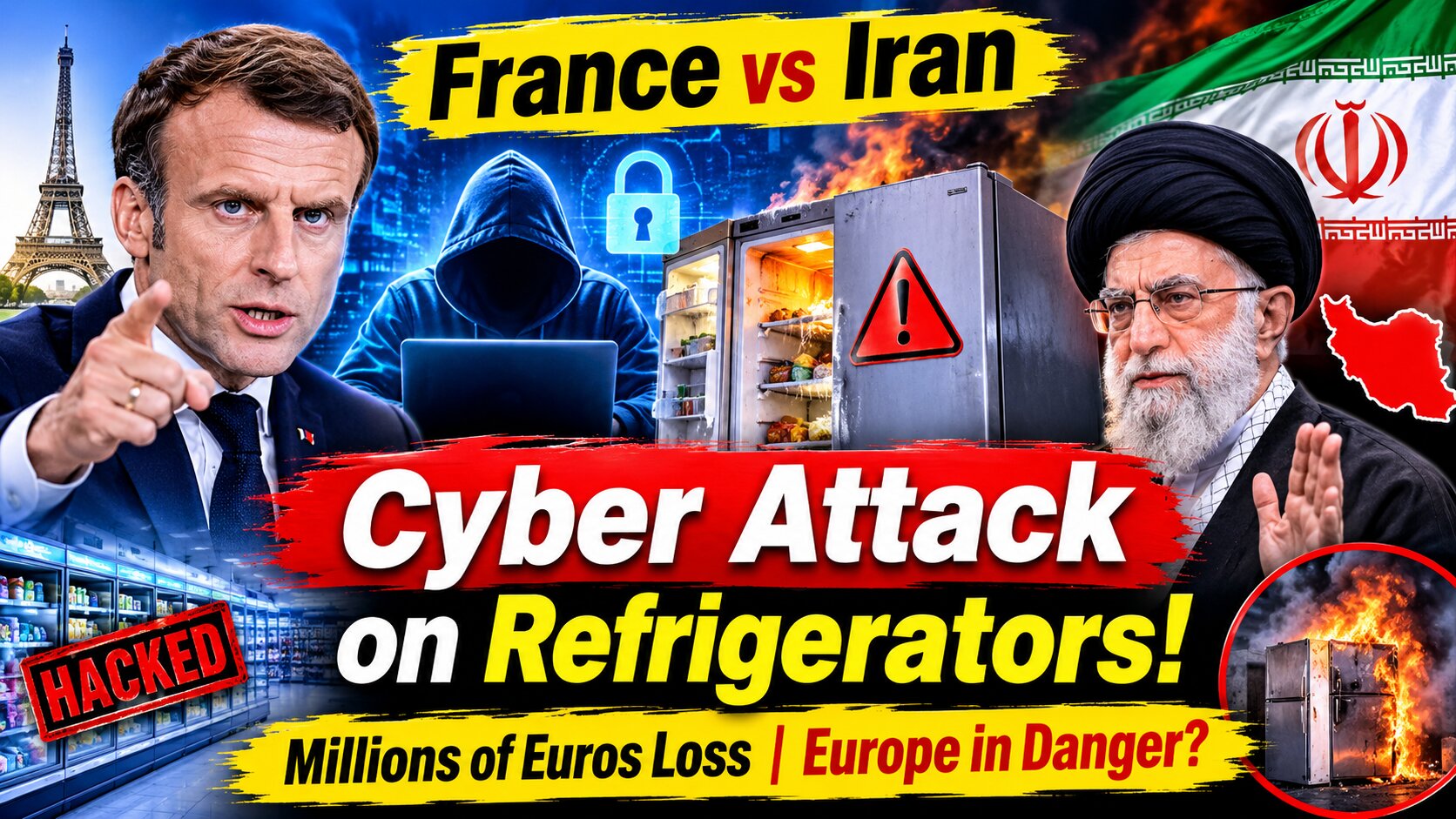
The hacking controversy in France has taken a new turn, bringing France and Iran face-to-face in a growing diplomatic dispute.
How the Refrigerator Cyberattacks Affected France
Last month, hundreds of refrigerators and freezers across France became targets of cyberattacks. Hackers reportedly breached the systems of around 700 commercial stores and remotely increased the temperature settings of their freezers. As a result, large quantities of stored food were spoiled and had to be discarded, causing losses worth millions of euros. In some locations, incidents of refrigerators catching fire were also reported.
Initially, there were concerns that Russia might be behind these attacks. However, French authorities have now accused Iran of being responsible. French officials have identified a cyber unit allegedly linked to Iran's Islamic Revolutionary Guard Corps (IRGC) as being behind the attacks.
Iran has responded to France's allegations, while France has summoned the Iranian ambassador and threatened further sanctions and retaliatory measures.
Interestingly, following the cyberattacks in France last month, similar refrigerator-hacking incidents were reported in several European countries earlier this month. Hackers allegedly increased refrigerator temperatures, causing large quantities of food to go to waste. While France has blamed Iran for the attacks on its territory, the perpetrators behind the incidents in other European countries have yet to be identified.
Why Does France Blame Iran?
But how did France conclude that Iran was responsible for these cyberattacks?
A joint report prepared by French intelligence agencies and cybersecurity authorities reportedly identified a cyber unit known as Shahid Kaveh, which French officials have linked to Iran's Islamic Revolutionary Guard Corps.
The report reportedly names three Iranian individuals allegedly associated with the unit: Hamid Reza Lashkarian, Mehdi Lashkarian, and Reza Salarvand.
According to the French report, the hackers operated through several secretive front groups, including Cyber Avengers and Cyber Eslami Front.
French prosecutors have stated that they have requested the issuance of international arrest warrants for those responsible for the cyberattacks.
Evidence Cited by French Authorities
France says it has connected the Shahid Kaveh unit to the attacks through several pieces of evidence. These reportedly include tracing the digital systems used to manipulate the refrigerators, matching the methods used in the attacks with techniques previously associated with Shahid Kaveh's other cyber operations, and identifying the use of the Persian language during the attacks.
Iran's Response to the Accusations
Following France's accusations, Iranian Foreign Minister Abbas Araghchi responded in a post on X.
He wrote that the French government could not even address the concerns of its own people, let alone resolve their complaints, and was instead blaming others for its failures.
Araghchi further stated that Iran was indeed powerful, but unlike France, it did not use its power to support mass killings in Gaza or the bombing of schools and hospitals.
A Wider Cybersecurity Threat Across the World
The incidents reported over the past few days highlight the growing cybersecurity threats facing Europe and the wider world.
First, supermarket refrigerators across Europe were reportedly hacked. Then came reports of a massive cryptocurrency theft involving Binance, one of the world's largest cryptocurrency exchanges, in which approximately $6.3 billion worth of cryptocurrency was allegedly stolen.
Meanwhile, hackers reportedly linked to China targeted more than 200 organizations across 14 countries in just 11 days.
According to Google researchers, several hacking groups have recently been using automated security-testing tools to carry out their cyberattacks.
One China-linked group reportedly managed to gain deep access to an organization's network in just 15 minutes.
Similarly, North Korean-linked hackers allegedly responsible for stealing billions of dollars in cryptocurrency from Binance also used automated technology to carry out their operations.
These developments demonstrate how rapidly cyber warfare is evolving. With advanced automation, state-linked hacking groups can potentially penetrate critical systems, disrupt businesses, destroy food supplies, and cause enormous financial damage within minutes.
What These Incidents Mean for Cybersecurity
The reported attacks show that cyber operations can affect more than computers and online accounts. Connected equipment used by supermarkets and other businesses may also become a target, potentially disrupting supply chains and causing significant financial losses. The incidents described in the report also underline the importance of protecting critical systems against increasingly sophisticated digital threats.
Frequently Asked Questions
What happened to refrigerators in France?
Who does France blame for the refrigerator cyberattacks?
Were similar attacks reported elsewhere in Europe?
What evidence does France say it has?
What is the wider concern about these cyberattacks?
Disclaimer: This article is for general news and informational purposes. Details may develop as investigations continue.
For more informative and current affairs news articles, keep visiting www.jobsblogs.online.